 Skip to content
 ABOUT THE BOOK
ABOUT THE BOOK
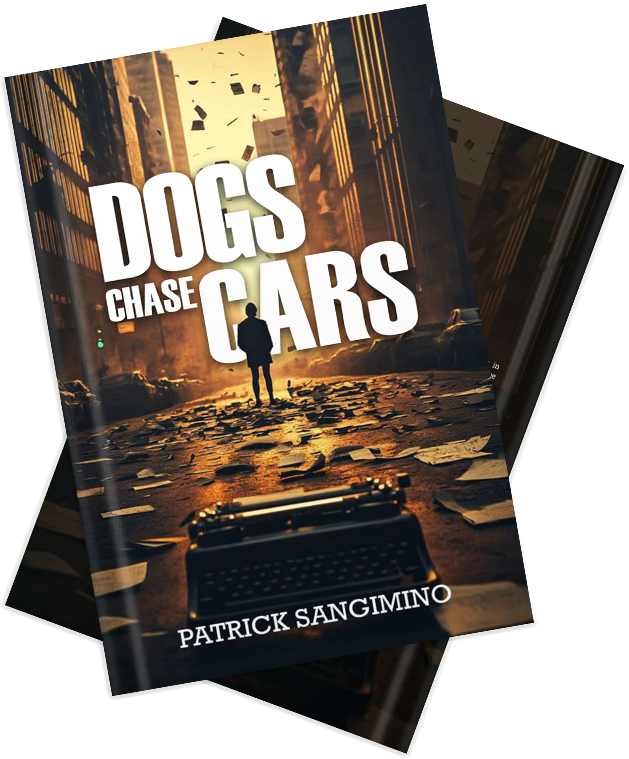
DOGS CHASE CARS
A Love Letter to Journalism, A Cautionary Tale of Its Fall
In Dogs Chase Cars, readers meet J.P. Pasquale, an award-winning sports columnist with decades of experience, an old-school mindset, and a front-row seat to the collapse of the industry he once worshipped. On what may be his last day on the job, Pasquale embarks on a slow drive through suburban Kansas, reflecting on the highs and heartbreaks of a career built on deadlines, ink stains, and storytelling.
Narrated over the course of a day with flashbacks that reach decades, the novel captures the essence of journalism through Pasquale’s weathered but unapologetically passionate voice. From reporting on the 1989 World Series earthquake to inadvertently scooping a blockbuster trade while waiting at a urinal, Pasquale’s story is full of anecdotes, regrets, and the perpetual question: was it all worth it?
J.P. is imperfect, humorous, introspective, and maddening – a man who devoted everything to his craft, only to become obsolete in a click-happy world that prizes clicks over art. But his voice is authentic, his tales linger, and his heart, bruised but still beating, bears the burden of what used to be.
BOOK
WHAT'S INSIDE THE BOOK
1
A New Beginning in the Midwest
When Patrick Sangimino first left the San Francisco Bay Area for Kansas in the early 1990s, he had no idea how profoundly the move would reshape his identity. Driving a beat-up Volvo into Overland Park, he was struck by the contrast between his urban upbringing and the fertile farmland of America’s Breadbasket. What began as culture shock soon grew into a deep appreciation for the Midwest’s values, hard work, community, and quiet faith. The chapter reflects on his early scepticism and gradual humility, as he learned to respect those who cultivated the land with as much dedication as athletes prepare for their careers. Through this lens, Sangimino introduces readers to the idea of transformation: that even a journalist once blinded by city arrogance could be embraced by a community built on tradition. This chapter lays the foundation for the book’s central tension—between the life he thought he wanted and the life he stumbled into —and sets the stage for the sacrifices, struggles, and insights that come with pursuing a career in journalism. It’s a fresh start, but one not without challenges, regrets, and unexpected beauty.
2
A Father’s Quiet Lessons
In Chapter 2, Sangimino takes readers back to his childhood, weaving an intimate portrait of his father, Vincenzo “Vinnie” Pasquale. Vinnie was a blue-collar man with strong hands, a stocky build, and an endless capacity for improvisation. Though he lacked formal education, he carried wisdom forged in the Great Depression and passed down through small but lasting gestures. One of the most powerful moments comes when he buys Patrick his first baseball glove—a modest Spalding model that symbolized both cultural pride and paternal love. The glove became more than just sporting equipment; it became a reminder of sacrifice, bonding, and the weight of a father’s unspoken devotion. Yet, Sangimino also acknowledges his own youthful ingratitude, recounting moments when embarrassment and pride clouded his ability to appreciate his father’s efforts. With honesty and regret, he admits to wishing he could revisit those moments and respond differently. The chapter is a heartfelt meditation on family, memory, and the ways love often reveals itself in quiet, imperfect acts. It asks readers to consider the lessons we too often overlook until it’s too late.
3
Storytelling and the Earthquake at Candlestick Park
This chapter highlights Sangimino’s lifelong addiction to stories, first as a captivated child listening to a recreation leader spin tales of sneaking into Giants games, and later as a young reporter covering his first World Series in 1989. But on October 17, the excitement of the Bay Bridge Series was interrupted by a devastating earthquake that shook San Francisco and the stadium itself. Suddenly, baseball didn’t matter. Sangimino describes how the disaster stripped away divisions: fans and players leaving Candlestick Park together, united not as athletes and admirers but as vulnerable people sharing fear and gratitude. For him, it was a defining moment, proof that journalism mattered. Reporting on the humanity of that night, he crafted a story that captured resilience, community, and perspective. The chapter shows how a crisis often clarifies purpose, and for Sangimino, it cemented his calling as a journalist. Beyond the quake, Chapter 3 is a love letter to storytelling. This kind binds people together, which makes ordinary moments unforgettable, and that shows why newspapers once mattered so deeply in people’s lives.
4
Fridays and the Fight to Stay Relevant
Fridays once symbolized celebration, but for Sangimino, they became dreaded appointments with his publisher, rituals where he was forced to justify his existence in an industry on life support. Chapter 4 captures the tension between the glory days of print journalism and the new reality of layoffs, shrinking readership, and corporate pressure. Once a “Teflon” columnist shielded by his popularity, he now finds himself wearing “Kevlar,” bracing against constant threats of irrelevance. The chapter blends humor and bitterness, describing pothole-ridden parking lots, coffee that now costs fifty cents, and bosses who once admired his work but now barely tolerate him. Yet beneath the sarcasm lies a deep grief for the decline of newspapers and the culture that once thrived inside bustling newsrooms. Sangimino admits he has led a charmed life, covering Super Bowls, mingling with legends, and enjoying the privileges of his craft. However, he also confronts the painful reality that the industry has shifted its focus to clicks, likes, and 280-character updates. This chapter is a sobering reflection on ageing, obsolescence, and the fight to stay relevant in a world that has little use for ink-stained storytellers.
